
















Stop studying English. Start acquiring it.
You already pulled off the impossible once. As a child — with no grammar book, no flashcards, no exams — you absorbed an entire language: thousands of words, every sound, every rhythm, just by living inside it. iconRead is built to let that same quiet magic happen again, in English.
The science: Krashen's quiet revolution
Linguist Stephen Krashen spent decades proving what most classrooms still ignore: we don't learn a language by memorizing rules — we acquire it by understanding messages we actually care about. He called the engine comprehensible input: when you understand language just a step beyond your current level (he wrote it i + 1), your brain builds the language for you, silently, with no drilling required.
Two of his ideas sit at the heart of iconRead:
- Comprehensible input. Acquisition happens when input is understood. The goal isn't to water English down — it's to make real English understandable, one word at a time.
- The affective filter. Anxiety, boredom, and the fear of being wrong raise a wall that blocks acquisition. Curiosity and enjoyment tear it down — so the input has to be compelling, something you genuinely want to watch.
Why pictures? Your brain keeps two copies
There's a second engine under the hood, and it's the reason for the icon in iconRead. Psychologists call it dual coding: a word stored only as a translation is one fragile trace, but a word fused to an image is stored twice — once as language, once as a picture — and each copy can revive the other. That's why you can forget a definition you copied ten times, yet never forget what umbrella looks like in the rain.
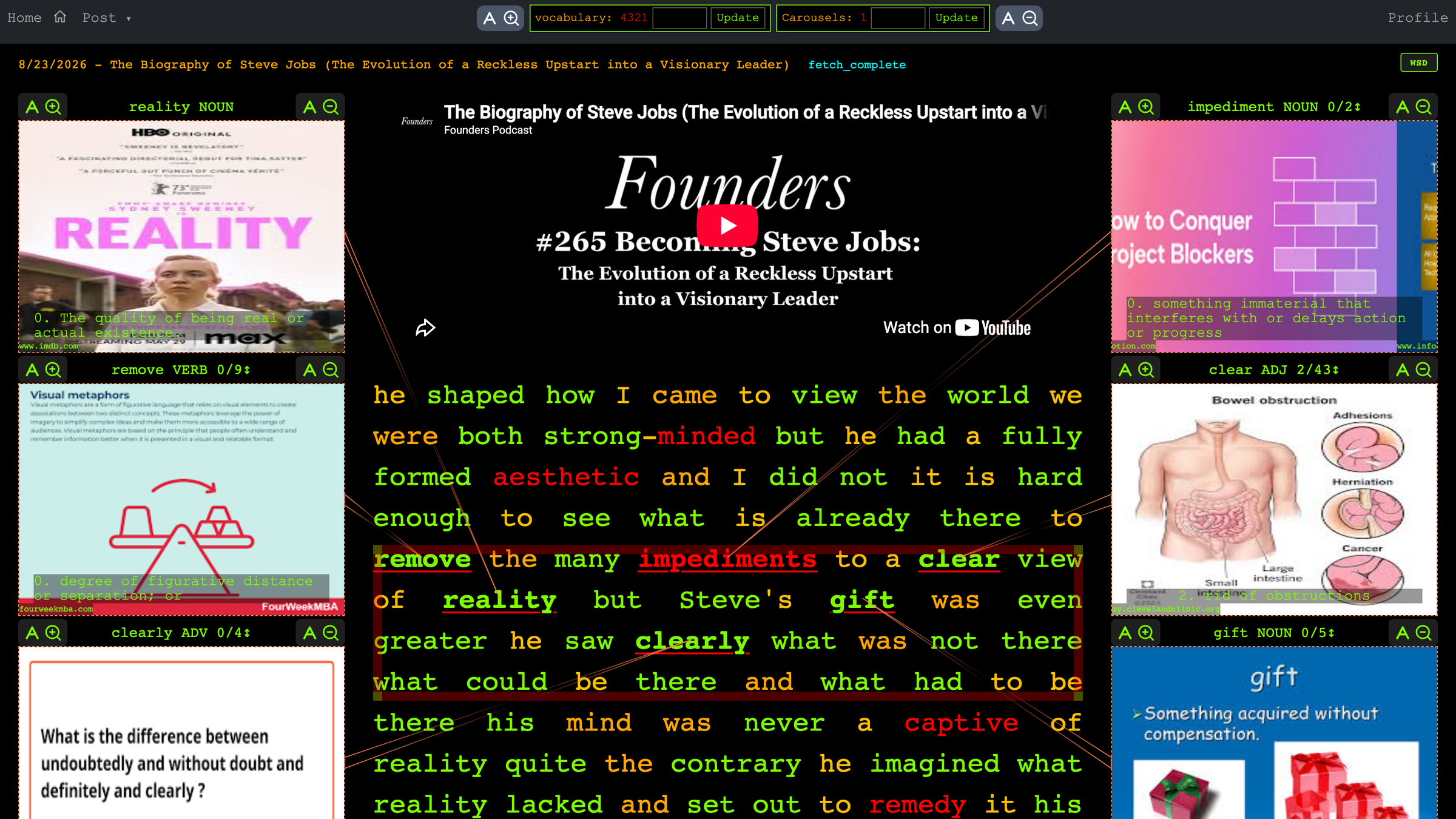
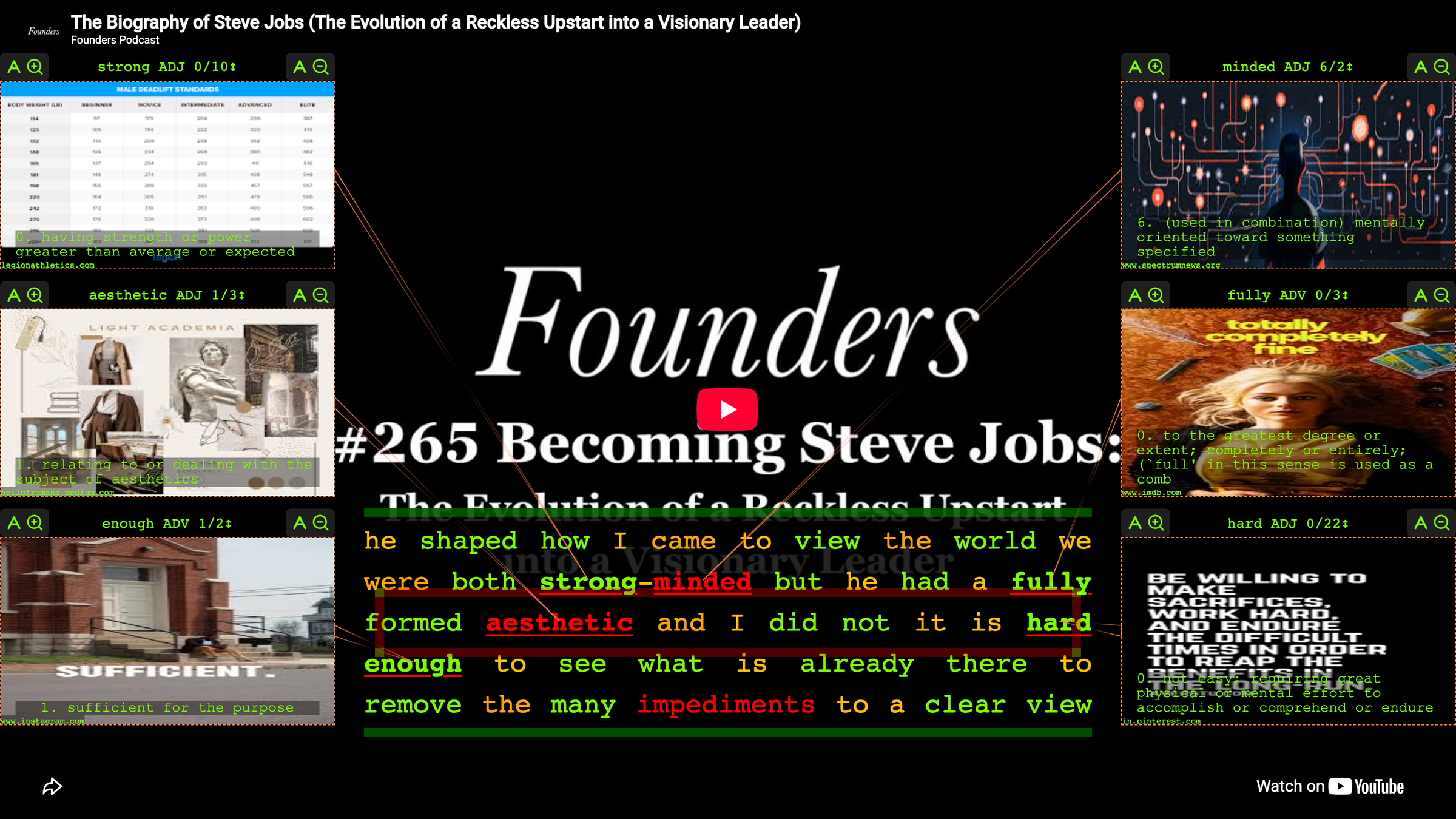
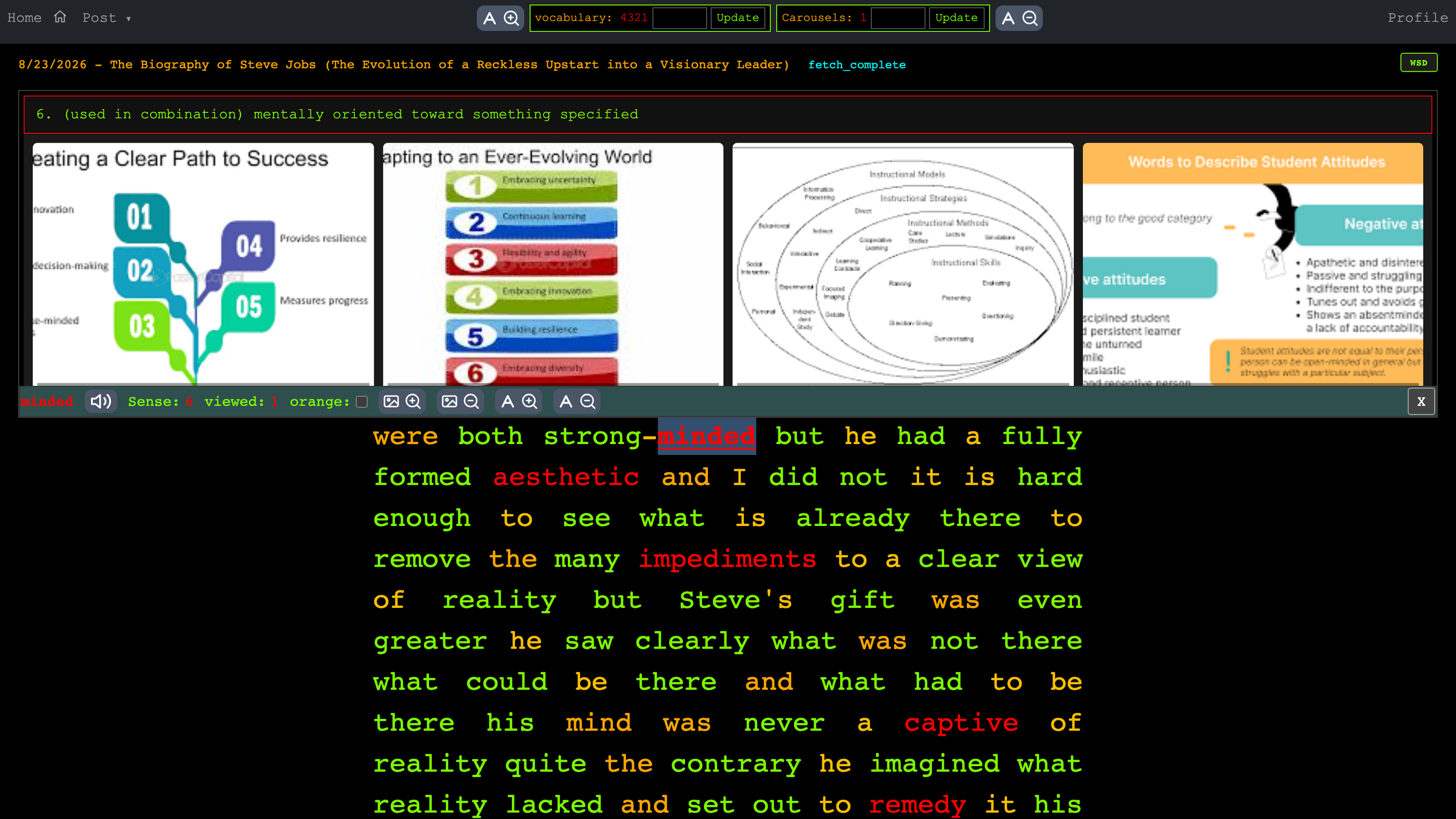
So iconRead never asks you to route English through your first language. While you read, the words just beyond your level are quietly trapped into picture boxes beside the text; double-tap any word and you see it (a gallery of images), hear it (native pronunciation), and read it (the dictionary sense, in English first) — in the same breath, without leaving the story. Meaning attaches directly to English, the way it attached to your mother tongue. And when you truly need a bridge, one more double-tap on a definition shows its Chinese — then hides it again, so the crutch never becomes the habit.
Listen like a native: replay any word, any span, any sentence
Reading is only half of input. In iconRead every word is a playback control: tap a word to hear exactly that word, tap a second word to hear everything between them, hold a word to hear its whole sentence — as many times as you like, no scrubbing, no rewinding. Missed a phrase at natural speed? Play it three times and move on. That is unlimited, self-directed listening practice, tied to the text you are looking at.
The unfair advantage of frequency
Here's the best-kept secret in vocabulary research: English words are wildly unequal. The most common ~3,000 word families do the heavy lifting in roughly 95% of everyday speech. Master those, and comprehension snowballs — every new sentence teaches you the rare words for free, from context.
iconRead is built around that curve. Its vocabulary dial knows how common every word is: set it to your level and the app quietly ignores what you already know, aims its picture-boxes at the words just beyond you — your personal i + 1 — and re-tunes the whole experience every time you grow. Tell it a word is yours (flag it orange) and it never wastes your attention on it again.
Turn anything you love into a lesson
Input only works if you actually want it. So iconRead turns your content into living, tappable reading:
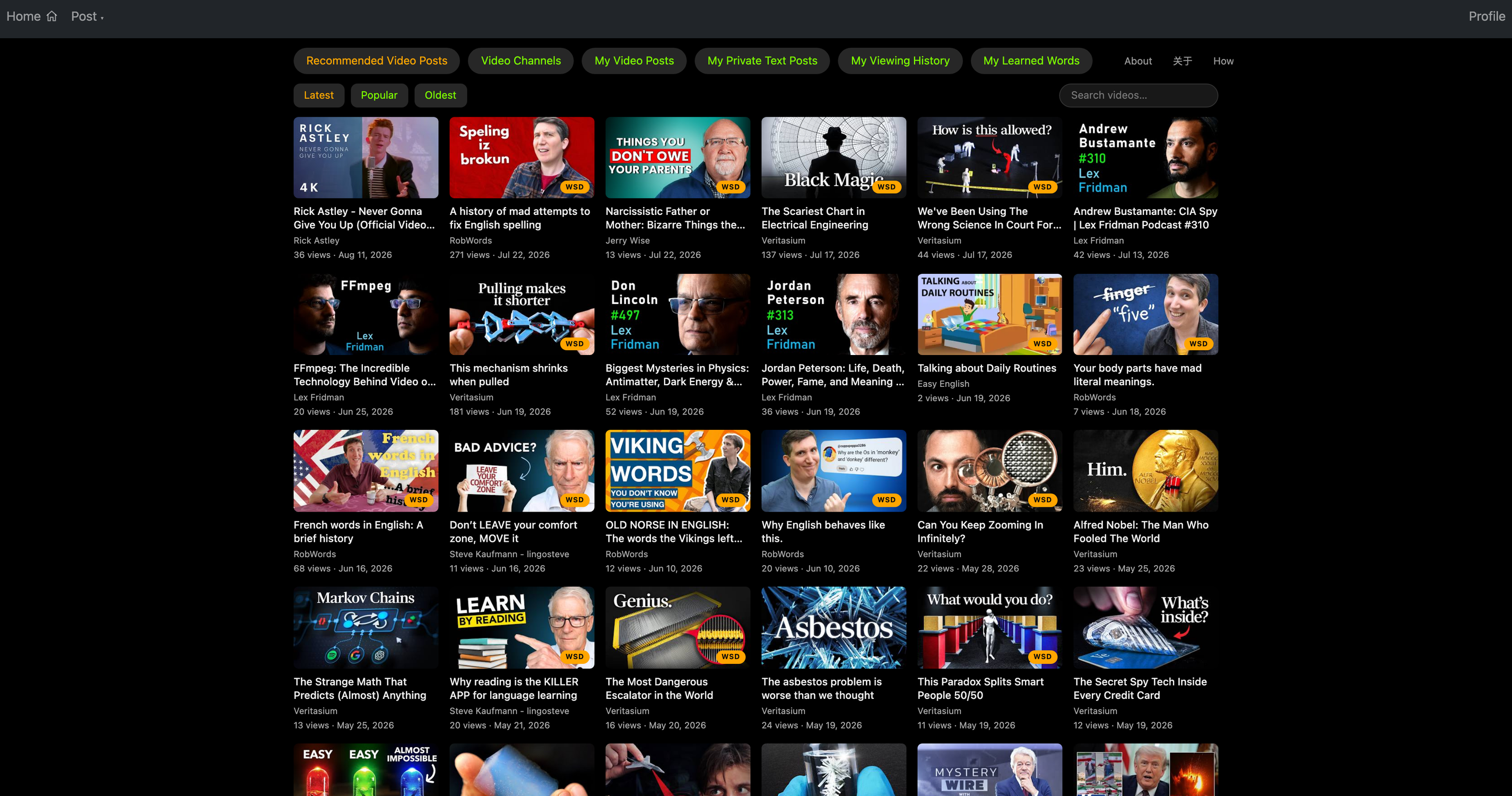
- Any YouTube video — paste a link, get word-synced subtitles you can read like a book. Browse whole channels other readers have brought in, too.
- Any text — paste an article, a chapter, song lyrics — and read it with pictures, or let the built-in narrator read it to you while every spoken word lights up.
- Any photo of a page — snap a menu, a sign, a paperback. iconRead reads the picture and rebuilds it as a lesson.
- Your own voice — talk, and your speech becomes a text you can study. Reading your own words in English is strangely addictive.
And because one word can mean five things, iconRead's sense-detection (the little WSD badge) reads the story the way you do — so by the river you get the river bank, not the one with ATMs.
Vocabulary that sticks — because you lived it
You won't memorize these words. You'll meet them — in context, fused to an image, a voice, and a moment in a story you cared about — and meet them again a video later, which is exactly the spaced re-encounter memory feeds on. The My Learned Words tab keeps the receipts: every word you've ever looked up, how many times you've met it, and which ones you've already claimed as yours. Watching that list grow is watching yourself acquire a language.
Open a video. Double-tap a strange word. Let your brain do what it was built to do.